
What is Stormwater Pollution?
Stormwater runoff refers to the water generated from rainfall and melting snow that flows over various surfaces such as lawns, parking lots and streets. This water typically moves through gutters, enters catch basins and travels via storm drain pipes and ditches, often without any treatment, before being discharged into nearby waterways. During its journey, stormwater collects a range of debris, including fast-food wrappers, cigarette butts and styrofoam cups, as well as harmful substances like gasoline, motor oil, antifreeze, fertilizers, pesticides and pet waste. The contamination from this polluted runoff poses significant threats to aquatic life, disrupts wildlife habitats and jeopardizes the safety of drinking water sources.
Stormwater pollution is primarily a consequence of human activities. Any substances we place on the ground or dispose of in storm drains can ultimately contaminate our water sources. It is our collective duty to prevent these pollutants from entering our waterways, as the quality of our water depends on our actions. By adopting a few straightforward practices, we can significantly improve the health of our water systems.
- Recycle used oil at certified facilities and maintain your vehicle to prevent leaks.
- Take your car to a car wash where the water gets treated and recycled.
- Follow directions on the bag when fertilizing, do not apply before it rains and use only when necessary.
- Properly dispose of your pet’s waste by flushing it down the toilet, or by placing it in a bag and throwing it in the trash.
- Keep your septic system well-maintained to prevent leaks.
How does the Town of Hammonton address stormwater pollution?
Hammonton works to minimize stormwater pollution through a variety of actions including the passage of municipal ordinances which protect the environment and regulate land use, through the proper maintenance of municipal stormwater structures and facilities and through the careful review of applications for new development.
The Town of Hammonton also works to educate residents and businesses through the use of public signage, pollution prevention outreach campaigns and partnerships with citizen groups and businesses.
For more information, visit the New Jersey Department of Environmental Protection Clean Water website at www.cleanwaternj.org.
Download: Stormwater Pollution Prevention Plan
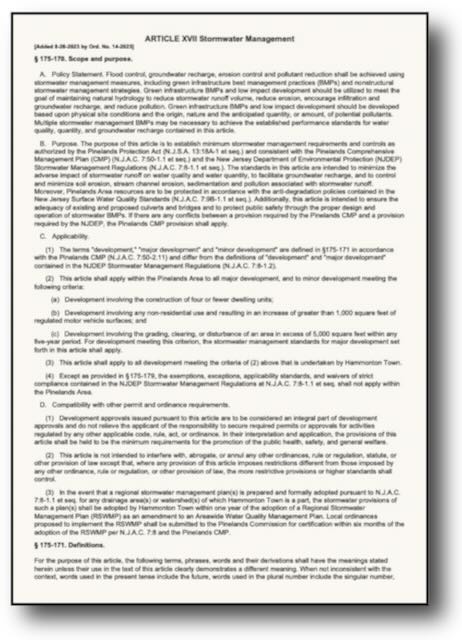
Download: Stormwater Management Ordinance
View: Hammonton Stormwater Management Ordinance Article XVII
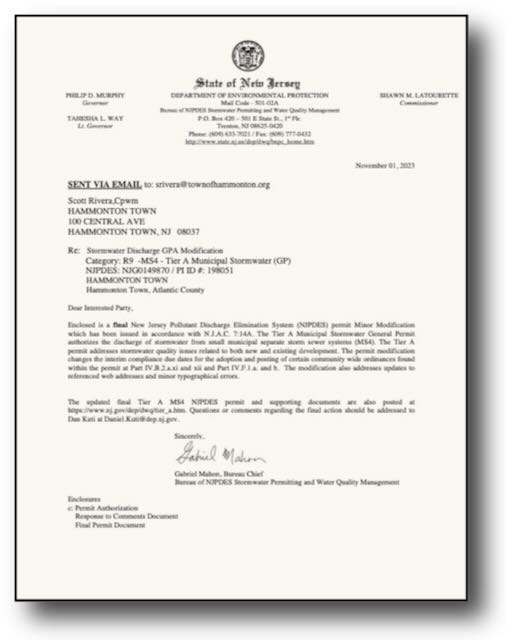
Download: Stormwater Permit
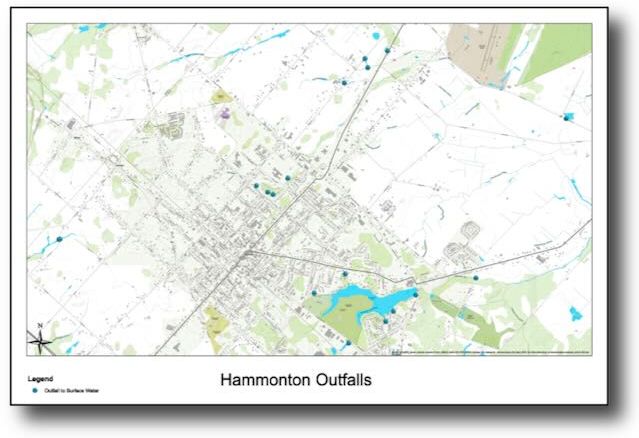
Download: Hammonton Outfalls Map
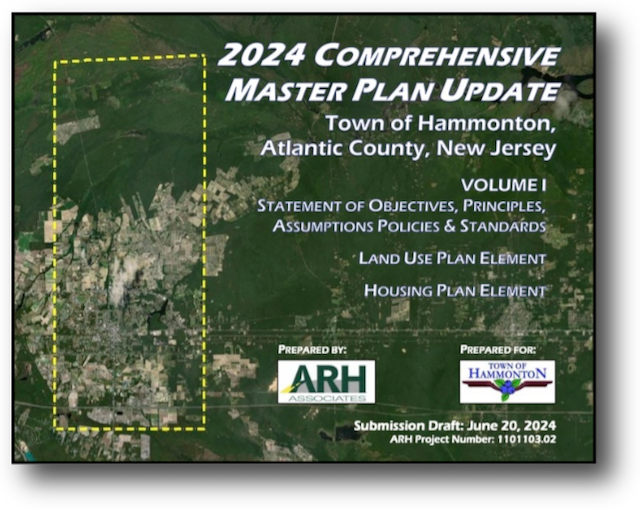
Download: 2024 Comprehensive Master Plan Update
Contact Information
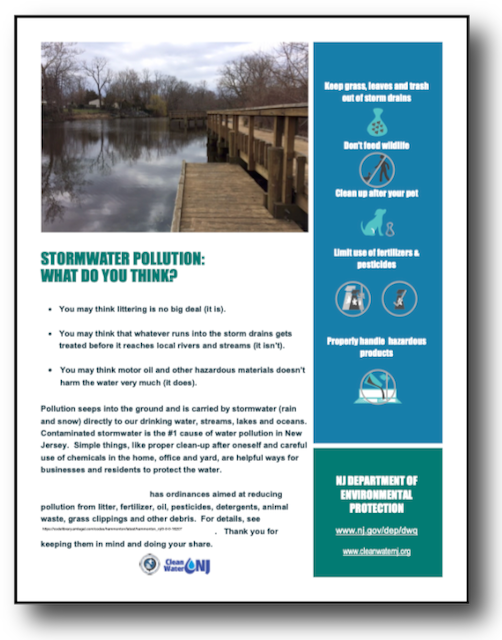
What do you think of stormwater pollution?
- You may think littering is no big deal (it is).
- You may think that whatever runs into the storm drains gets treated before it reaches local rivers and streams (it isn’t).
- You may think motor oil and other hazardous materials doesn’t harm the water very much (it does).
Pollution seeps into the ground and is carried by stormwater (rain and snow) directly to our drinking water, streams, lakes and oceans. Contaminated stormwater is the #1 cause of water pollution in New Jersey. Simple things, like proper use of chemicals in the home, office and yard, are helpful ways for businesses and residents to protect the water.
- Keep grass, leaves and trash out of storm drains.
- Don’t feed wildlife.
- Clean up after your pet.
- Limit use of fertilizers & pesticides.
- Properly handle hazardous products.
Download: Stormwater Pollution Tip Card
Site: NJ Department of Environmental Protection
Site: Clean Water New Jersey
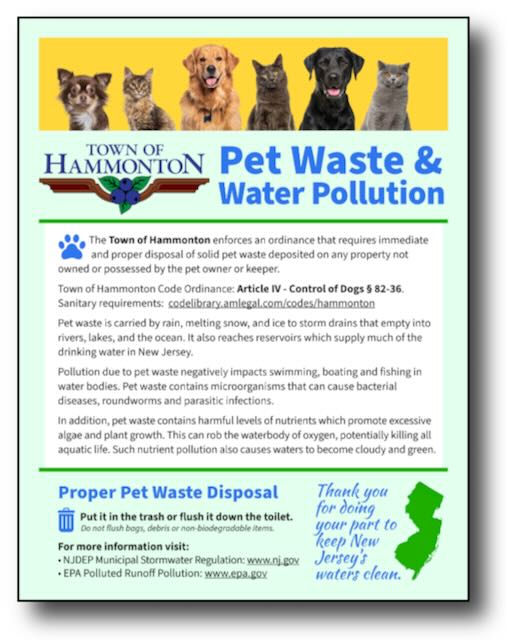
Pet Waste & Water Pollution
The Town of Hammonton enforces an ordinance that requires immediate and proper disposal of solid pet waste deposited on any property not owned or possessed by the pet owner or keeper.
Town of Hammonton Code Ordinance: Nuisances by Dog; Sanitary Requirements § 82-36
Download: Article IV – Control of Dogs
- No person who owns, keeps, harbors, walks, or has custody of a dog shall permit, cause, suffer or allow such dog to defecate upon, soil, defile or commit any nuisances of any kind on any public or private property without the express permission of the owner of such property.
- In the event a dog should soil, defile or defecate upon any public or private property, the owner, keeper, harborer and/or person having custody of said dog shall immediately remove and sanitarily dispose of said dog’s feces and droppings deposited by such dog, which removal shall be by shovel, container, disposal bag or any other sanitary matter.
Pet waste is carried by rain, melting snow, and ice to storm drains that empty intov rivers, lakes, and the ocean. It also reaches reservoirs which supply much of the drinking water in New Jersey.
Pollution due to pet waste negatively impacts swimming, boating and fishing in water bodies. Pet waste contains microorganisms that can cause bacterial diseases, roundworms and parasitic infections.
In addition, pet waste contains harmful levels of nutrients which promote excessive algae and plant growth. This can rob the waterbody of oxygen, potentially killing all aquatic life. Such nutrient pollution also causes waters to become cloudy and green.
Download: Pet Waste & Water Pollution Tip Sheet
Lawn Fertilizer & Pesticide Pollutants
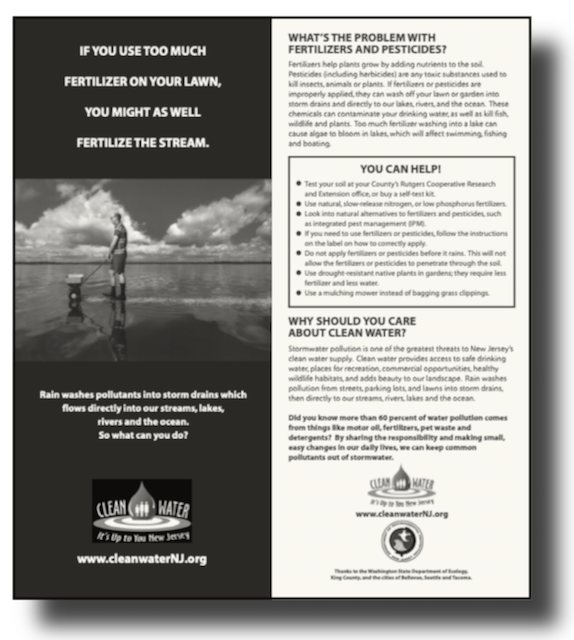
What’s the problem with fertilizers and pesticides?
Fertilizers help plants grow by adding nutrients to the soil. Pesticides (including herbicides) are any toxic substances used to kill insects, animals or plants. If fertilizers or pesticides are improperly applied, they can wash off your lawn or garden into storm drains and directly to our lakes, rivers, and the ocean. These chemicals can contaminate your drinking water, as well as kill fish, wildlife and plants. Too much fertilizer washing into a lake can cause algae to bloom in lakes, which will affect swimming,fishing and boating.
You can help!
- Test your soil at your County’s Rutgers Cooperative Research and Extension office, or buy a self-test kit.
- Use natural, slow-release nitrogen, or low phosphorus fertilizers.
- Look into natural alternatives to fertilizers and pesticides, such as integrated pest management (IPM).
- If you need to use fertilizers or pesticides, follow the instructions on the label on how to correctly apply.
- Do not apply fertilizers or pesticides before it rains. This will not allow the fertilizers or pesticides to penetrate through the soil.
- Use drought-resistant native plants in gardens; they require less fertilizer and less water.
- Use a mulching mower instead of bagging grass clippings.
Why should you care about clean water?
Stormwater pollution is one of the greatest threats to New Jersey’s clean water supply. Clean water provides access to safe drinking water, places for recreation, commercial opportunities, healthy wildlife habitats, and adds beauty to our landscape. Rain washes pollution from streets, parking lots, and lawns into storm drains, then directly to our streams, rivers, lakes and the ocean.
Did you know more than 60 percent of water pollution comes from things like motor oil, fertilizers, pet waste and detergents? By sharing the responsibility and making small, easy changes in our daily lives, we can keep common pollutants out of stormwater.
Download: Fertilizer & Pesticide Pollutants Tip Card
Car Wash Pollutants
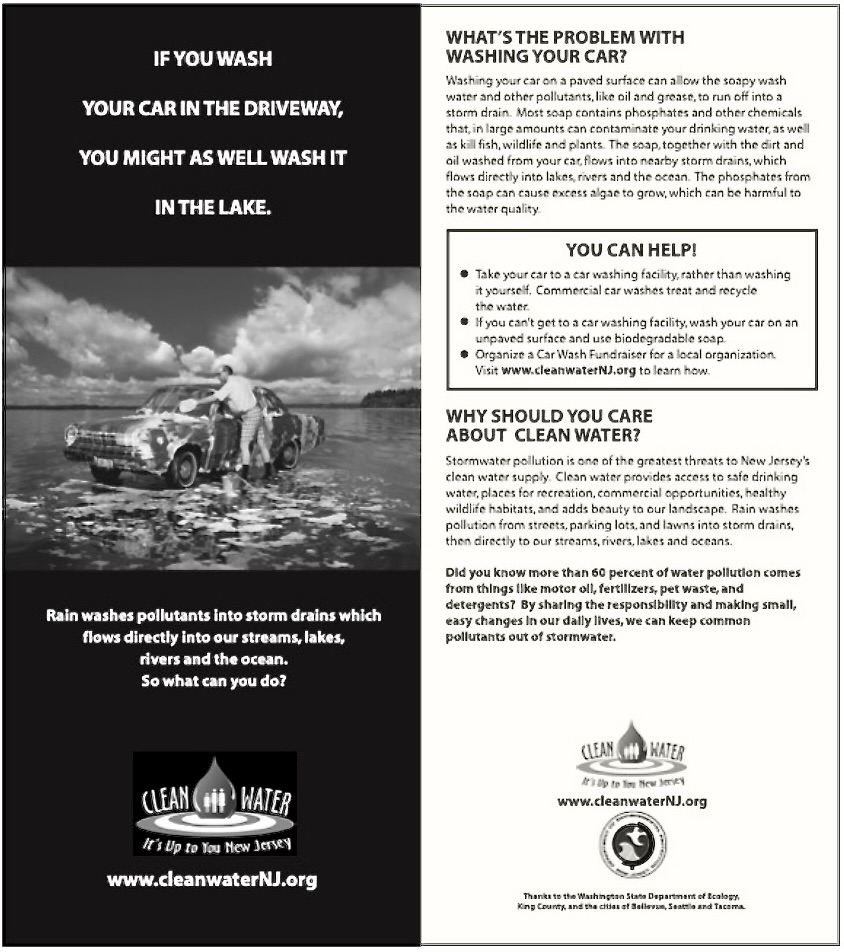
Washing your car on a paved surface can allow the soapy wash water and other pollutants, like oil and grease, to run off into a storm drain. Most soap contains phosphates and other chemicals that, in large amounts can contaminate your drinking water, as well as kill fish, wildlife and plants. The soap, together with the dirt and oil washed from your car, flows into nearby storm drains, which flows directly into lakes, rivers and the ocean. The phosphates from the soap can cause excess algae to grow, which can be harmful to the water quality.
You can help!
- Take your car to a car washing facility, rather than washing it yourself.
- Commercial car washes treat and recycle the water.
- If you can’t get to a car washing facility, wash your car on an unpaved surface and use biodegradable soap.
- Organize a Car Wash Fundraiser for a local organization.
- Visit www.cleanwaterNJ.org to learn how.
Download: Car Wash Tip Card

Hammonton Public Works Department
Scott V. Rivera CPWM, CRP/SRMP
Public Works Department Head
Phone: 609-567-4336
E-Mail: srivera@townofhammonton.org